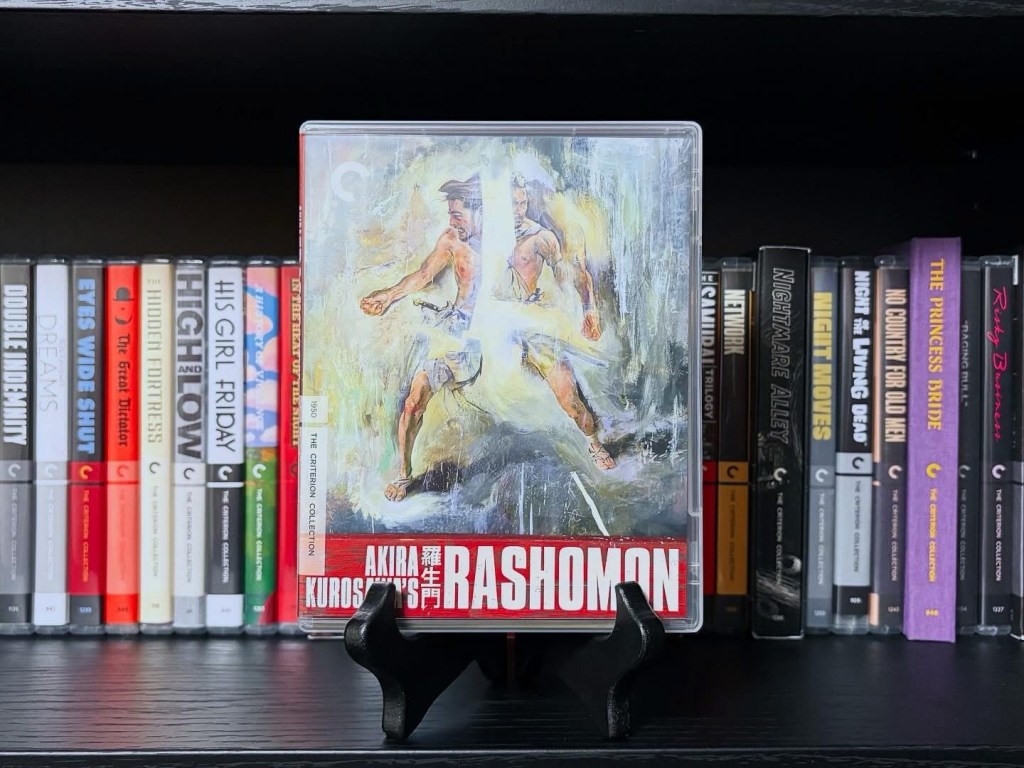
Written by Dean Zarbaugh II
The husband, the wife… or the bandit? Four people recount different versions of the story of a man’s murder and the rape of his wife.
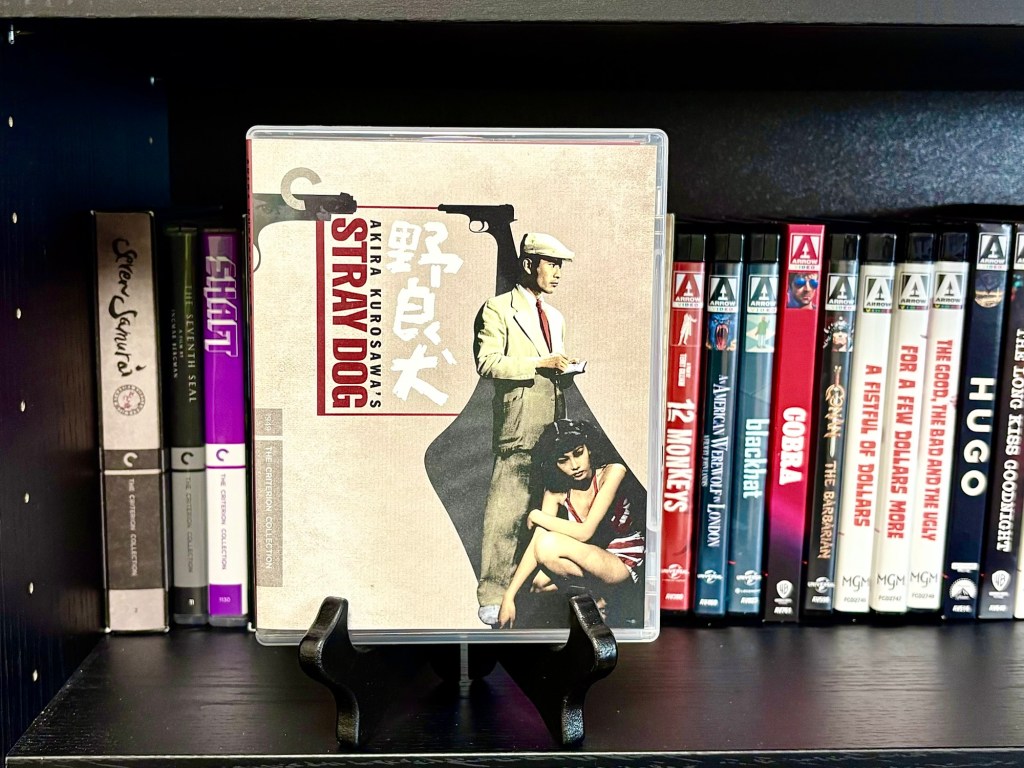
Akira Kurosawa is one of my top 5 favorite filmmakers of all time alongside Steven Spielberg, Werner Herzog and Martin Scorsese to name a few. His films have had a huge impact on me not only as a writer and a director, but as a fan of films in general. His filmography covers a wide range of topics and themes. Truly one of my biggest inspirations.
Rashomon, Kurosawa’s powerful tale about a man’s murder and the rape of his wife in 11th century Japan, is told through multiple viewpoints, each having distinct differences in how the events play out. We hear from Tajōmaru, the bandit accused of committing the rape and murder, the wife who is attacked, the ghost of the murdered samurai and a woodcutter who finds the body of the samurai in the forest.
The non-linear approach was a bold storytelling strategy, and inspired countless filmmakers. It left such an impact on cinema that any subsequent film that uses this storytelling technique is called the “Rashomon Effect.”
In the film Kurosawa explores the theme of truth, and how it can be distorted depending on who tells the story and what they want to accomplish by telling the story. For example, “history is written by the victors.” When reading accounts of events told from the winning party, they are likely distorted versions of events to make themselves look better.
Take Tajōmaru’s account of the events for example. The way he tells the story, he comes off as a strong and slick bandit who lures an inferior samurai away from his wife with the promise of buried treasure. Successfully tricking his opponent with his cunning, he ties up the samurai and returns for his “reward” by seducing the samurai’s wife. She then asks him to fight her husband and she will stay with the winner. Upon the swift defeat of the samurai, Tajōmaru returns to find that the wife has fled.
Masago, the wife, being a victim of Tajōmaru’s heinous crime obviously sees things much differently. In her version of events, he is portrayed as a stark raving mad lunatic with a lust for rape and murder while her husband can only show her sadness, contempt, and a cold, indifferent stare after her attack.
Through a Shinto medium, the dead samurai gives his account of events, which again differ wildly from the previous two. Here, Masago goes mad after being attacked and turns Tajōmaru on her husband while she flees.
But which one is the truth? We are never given an objective account of the events, and that’s the point. What is truth, except events seen through the lens of our own perception/bias? Even the woodcutter’s “true” version of the events at the end of the film is a story that allows him to save face and stroke his own ego.
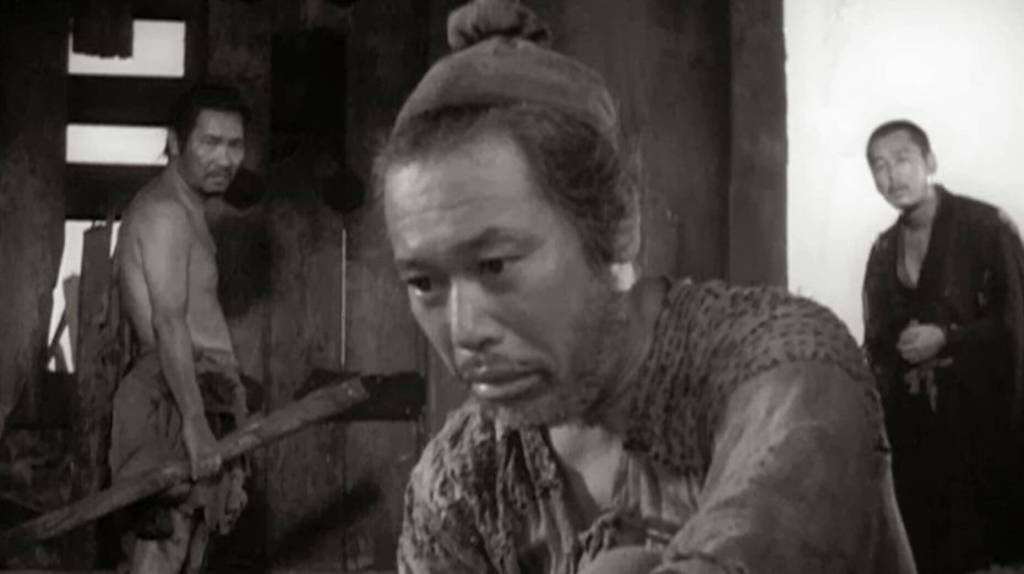
Faith, pride, shame, and morality are also themes that Kurosawa explores throughout the film. The priest has his faith crushed upon seeing what humans are capable of doing to one another, but has it restored in the end when the woodcutter agrees to raise an infant abandoned at the Rashomon gate as one of his own. Masago struggles with pride and shame after her attack, and in at least one version turns on her husband for his disownment of her.
The cast consisting of Toshirō Mifune, Machiko Kyō, Masayuki Mori, Taskashi Shimura, and Minoru Chiaki shine. The Mifune, Kyō and Mori trio especially stand out, playing the same event in drastically different ways. Mifune oscillates between a stark raving mad animal with a lust for murder and conquering women, and a brilliant, cunning outlaw, one step ahead of everyone. In the hands of less capable actors, emotional swings like that can spell disaster. To Toshirō Mifune, it’s a walk in the park.
Similarly, Machiko Kyō’s portrayal of Masago spans the entire gamut of emotions. In the dead samurai’s version of events, she gleefully accepts Tajōmaru’s proposal, in exchange for killing her husband for disowning her after Tajōmaru’s attack. A character that was seen as quiet and docile in other accounts is now giving orders to her husband and her attacker. Like Mifune, she rises to the occasion and shines.
Masayuki Mori’s portrayal of the samurai is another masterclass in acting, playing the samurai as stoic, fearful, and disgusted with ease. He is an incredible actor with a range of abilities that keep you glued to his performance.
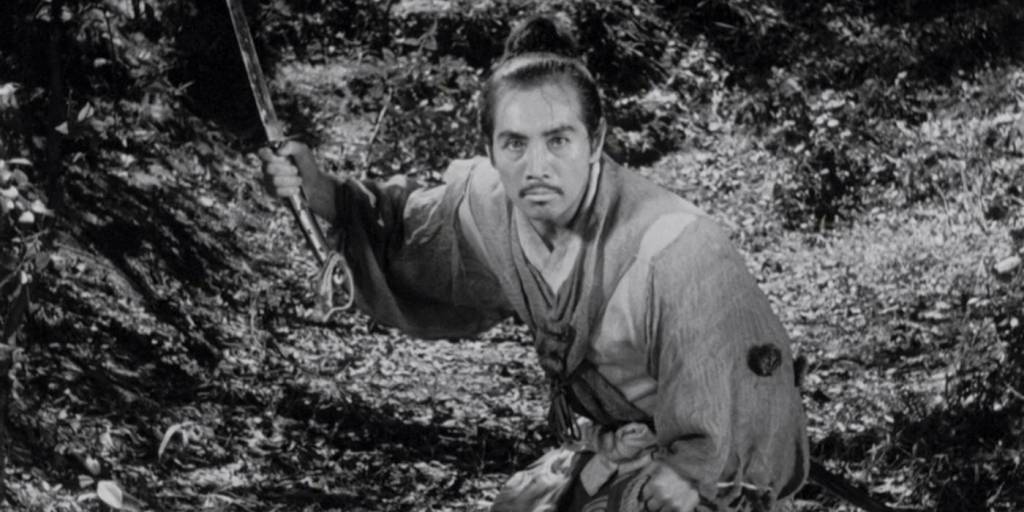
As always, Kurosawa and cinematographer Kazuo Miyagawa create some beautiful imagery behind the camera. As much as the acting differs from story to story, so does the camera movements and blocking. It’s a brilliant use of storytelling with imagery. Kurosawa’s use of long sequences without dialogue allows the impeccable camerawork and framing to tell the story.
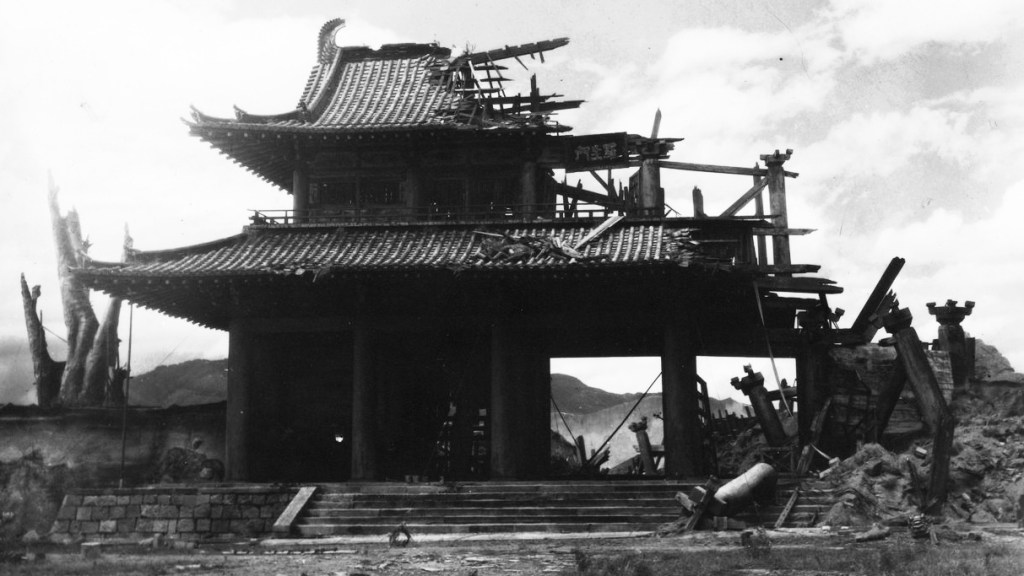
Each location has their own unique look and feel to them. At the Rashomon gate, it is bleak and rainy. Not a light drizzle, either. The rain comes down in sheets of water, pinning the woodcutter and monk at the gate with a commoner who they tell their story to. In the forest, he juxtaposes the beautiful scenery with the harsh brutality of the attack and murder. The use of light and darkness, especially in the forest reflects the obscurity of truth in the different accounts of the events.
Almost 80 years later, Rashomon remains one of the greatest cinematic achievements of the 20th century to the point that it has been copied and parodied many times over, but still stands tall above them all. It is one of the most important films ever made and a must see for any fan of movies.
⭐️⭐️⭐️⭐️1/2



 The Dean of Cinema
Leave a comment