Written by Dean Zarbaugh II
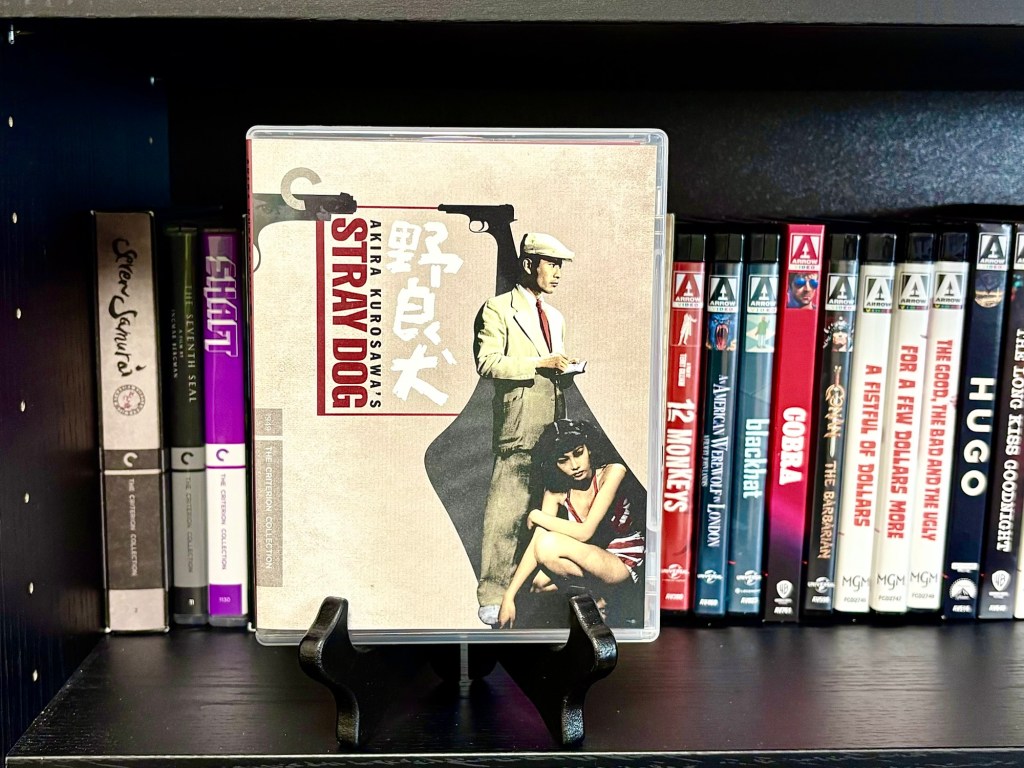
The Suspense Filled Story of 7 Bullets! A bad day gets worse for young detective Murakami when a pickpocket steals his gun on a hot, crowded bus. Desperate to right the wrong, he goes undercover, scavenging Tokyo’s sweltering streets for the stray dog whose desperation has led him to a life of crime. With each step, cop and criminal’s lives become more intertwined and the investigation becomes an examination of Murakami’s own dark side.
Stray Dog is an Akira Kurosawa film that flew under the radar film for me for a long time. With its addition to the Criterion Collection in 4K UHD, it was an instant order. It is a phenomenal film with impeccable cinematography, remarkable acting and a thrilling story. I’ve mentioned previously how much I enjoy Kurosawa’s work, so it was fun to dive in to a film that I haven’t seen in ages.
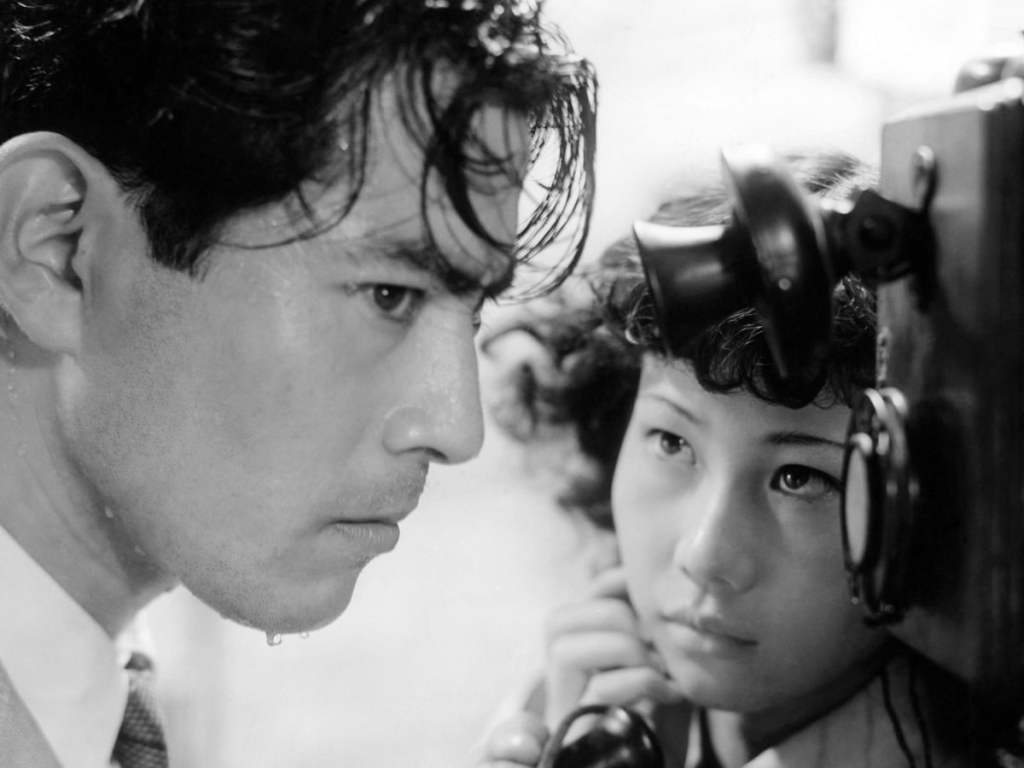
Kurosawa and cinematographer Asakazu Nakai’s use of blocking and framing draws you in and keeps you glued to the screen. You can see glimpses of the work that would follow Stray Dog in their use of light, shadow and framing. Kurosawa and Nakai would go on to collaborate on films like Seven Samurai, Ran, Ikiru, Throne of Blood, High and Low and more. The use of b-roll footage in the street sequences makes the film feel more alive and tense. It draws viewers into the squalid conditions and poverty that were rampant in the country at the time. This footage was shot by Kurosawa’s chief assistant Ishirō Honda, who would eventually direct classics like Godzilla and Mothra. Every frame is filled with characters drenched in sweat. It adds to the tension throughout the film that Kurosawa continues to ramp up with every scene. He filmed Stray Dog during one of Japan’s most intense heat waves, lending another layer of realism to the film. You can almost feel the heat radiating off the screen.
The story grips you from the very beginning. It immediately takes off and keeps you on your toes until the very end. Kurosawa couches the noir detective story within a study on post-war Japan and the social conditions prevalent at that time. The entire country is on edge. The script from Kurosawa and collaborator Ryuzo Kikushima harnesses that tension and lets it loose on the audience. Kurosawa and Kikushima focuses the film on the struggles of soldiers returning from war who are having trouble rebuilding their lives now that it’s over. He cleverly mirrors traits in both the protagonist and antagonist; both being veterans of the war, and both experiencing the same poor treatment upon returning home. Where one digs in and works hard by joining the police force, the other resorts to the easy path of crime and violence. Both are dealing with extreme feelings of guilt and responsibility, but go about it differently. The story is paced so well that even a nine minute sequence through the city’s underbelly with no dialogue seems like it goes by in the blink of an eye. Kurosawa originally wrote the story as a novel and tried to adapt the novel into a script but found that it was much harder to do than simply writing a script from scratch. He was mainly influenced by Georges Simenon and Jules Dassin’s story The Naked City.
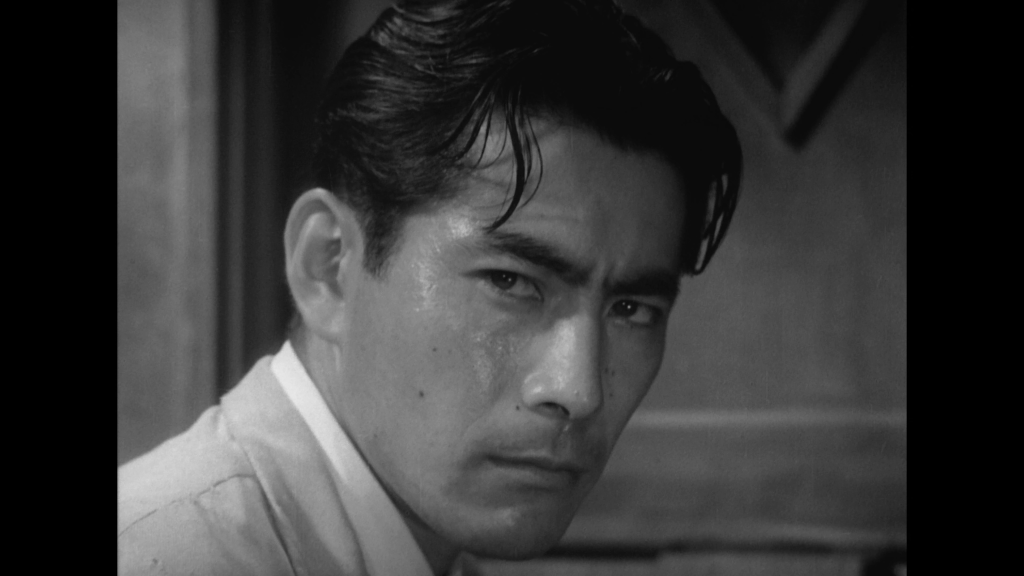
Toshiro Mifune is remarkable in the film. A departure from his more brash roles like in Seven Samurai or Throne of Blood, Mifune’s performance as rookie Detective Murakami is incredible in its understated nature. Murakami is racked with guilt over losing his sidearm. Mifune plays Murakami as emotionally vulnerable, and frustrated at his mistakes due to his greenhorn status. He contrasts this with a more high energy performance during scenes like his mad-dash pursuit through the criminal underground. He is desperate to catch this man and end the crime spree being committed with his gun. Mifune regularly defers to co-star Takashi Shimura in their scenes together, rather than overtake the scene.
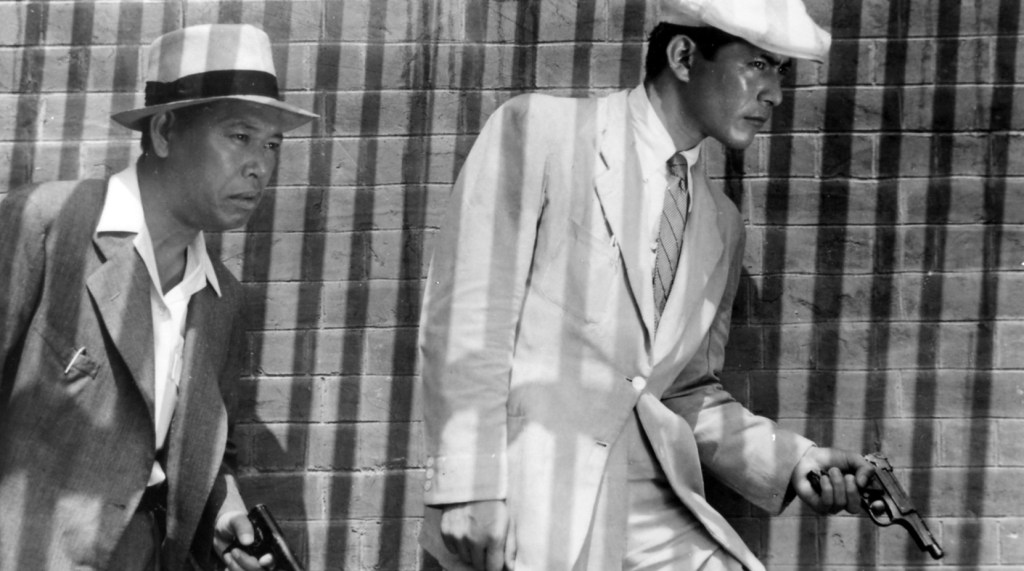
Takashi Shimura plays the more seasoned, wisened Detective Satō. Shimura excels in these types of mentor roles, especially in Kurosawa films. Together with Mifune, their collaborations with Kurosawa are some for the history books. Shimura is one of the greatest actors to grace the silver screen and gives 100% in every performance. Stray Dog is no different. He shines in this film, giving Satō a calm, cool, and contemplative nature and helps usher Murakami into becoming his own detective. He’s constantly pushing Murakami to look at the whole picture and follow his instincts.
Keiko Awaji is fantastic as Harumi one of the antagonists. As a teenager, Awaji holds her own in her scenes opposite Mifune and Shimura, hardly an easy task when paired with such powerhouse performers. Along with Yusa, played by Isao Kimura, Harumi gives the audience a glimpse into the desperation and plight of the lower class in that era. Awaji showcases Harumi’s anger at the system and the circumstances that have led to her position. It’s a remarkable performance and equally memorable as Mifune and Shimura’s. Similarly, Kimura does an excellent job showcasing that same desperation and anger at his disillusionment in society. He embodies the rabid “stray dog” personality whose only choice left is violence. Kurosawa is skilled at bringing out the best from his actors.
Stray Dog is a wild ride through the streets of post-war Japan. Tension fills the air. Kurosawa frames many scenes as tightly as possible to add to the sweltering, claustrophobic feeling that permeates the film. It’s one of my favorite Kurosawa films and offers a peak at the amazing career that followed. He is a master filmmaker and storyteller and Stray Dog is another in a long line of masterpieces from him. It doesn’t get the same attention that some of his later work like Throne of Blood, Dreams, or Seven Samurai gets, but it should. Don’t let this wonderful Kurosawa noir thriller fly under your radar.
⭐️⭐️⭐️⭐️ 1/2

 The Dean of Cinema
Leave a comment